
With 58% of the U.S. workforce freelancing in 2025, up from 42% just five years ago, the competition for clients has never been fiercer. Yet most freelancers still treat their portfolio as an afterthought, something to throw together when work dries up. That's backwards. A well-built portfolio isn't just a showcase of past work. It's the engine behind consistent, inbound opportunities and the single clearest signal to clients that you're worth hiring. This article walks you through practical techniques, real data, and field-tested advice to help you build a portfolio that stabilizes your income and sets you apart.
Table of Contents
- The new freelance landscape: Why portfolios are non-negotiable
- Portfolios as your most powerful sales tool
- From no experience to must-hire: Overcoming barriers with a portfolio
- How portfolios clarify your value—and boost your stability
- Building a standout freelance portfolio: Steps and common mistakes
- The uncomfortable truth most freelancers overlook about portfolios
- Ready to boost your freelance income stability?
- Frequently asked questions
Key Takeaways
| Point | Details |
|---|---|
| Portfolios drive visibility | A well-crafted portfolio sets you apart in a crowded freelance market. |
| Prove your value fast | Case studies and metrics in your portfolio provide instant trust and clarity for clients. |
| Overcome experience gaps | Portfolio storytelling bridges the gap for newcomers and career changers. |
| Clarify and stabilize income | Portfolios signal competence and reliability, leading to more repeat clients and stable earnings. |
The new freelance landscape: Why portfolios are non-negotiable
The gig economy has transformed dramatically. The freelance workforce surged 38% in five years, meaning more talented people are competing for the same pool of clients. That shift changes everything about how you market yourself.
Clients no longer have time to take chances. They scan, assess, and decide in minutes. Your portfolio is the first filter they use, and it signals three things instantly: your level of professionalism, your area of expertise, and whether you can be trusted with their budget. Without one, you're asking a stranger to hire you on faith alone.
"In a crowded freelance market, your portfolio isn't optional. It's your handshake, your resume, and your sales pitch rolled into one."
The emotional cost of inconsistency in freelance income is real. Feast-and-famine cycles wear you down mentally and financially. A strong portfolio reduces that volatility by attracting better-fit clients who already understand your value before the first conversation. That means fewer low-ball offers, fewer scope disputes, and more repeat work.
Here's what freelancers without a portfolio miss out on:
- Inbound inquiries from clients who found them through search or referrals
- Higher-paying projects that require proof of expertise upfront
- Faster client decisions, since there's nothing to evaluate
- Credibility when competing against other freelancers for the same contract
- Leverage in rate negotiations
If you're wondering whether you're taking on too many freelance clients just to compensate for low-quality leads, a better portfolio is often the fix. It filters out poor fits and attracts clients who are already aligned with your niche. The freelancer portfolio guide from xflowpay reinforces this: portfolios are one of the highest-leverage investments a freelancer can make in their own business.
The bottom line: Skipping a portfolio in 2026 isn't modest. It's self-sabotage.
Portfolios as your most powerful sales tool
A portfolio builds trust, demonstrates value, and proves skills to potential clients faster than any pitch email ever could. Think of it this way: a cold pitch asks a client to believe you. A portfolio shows them proof.

The numbers back this up. 63% of freelancers say a strong portfolio is the biggest factor in winning work, and skilled freelancers collectively generated $1.5 trillion in 2024. That's not a niche market. That's an economy, and portfolios are the currency of credibility inside it.
Cold pitch vs. portfolio pitch: What clients actually experience
| Factor | Cold pitch only | Portfolio-backed pitch |
|---|---|---|
| Trust level | Low, unverified | High, evidence-based |
| Decision speed | Slow, requires follow-up | Fast, client self-qualifies |
| Rate flexibility | Limited, price-sensitive | Higher, value is visible |
| Conversion rate | Low | Significantly higher |
| Client fit | Random | Niche-aligned |
So what should your portfolio actually include? Here's a practical order of priority:
- Case studies that follow a problem-solution-result format, showing how you identified a challenge, what you did, and what changed
- Quantified results wherever possible (traffic increased by 40%, project delivered two weeks early, client saved $8,000)
- Client testimonials that speak to your reliability and communication, not just your technical skill
- Before-and-after visuals that make your impact impossible to ignore
- A clear niche statement so clients immediately know if you're the right fit
Pro Tip: Niche specificity beats variety every time. A portfolio with five tightly focused case studies in one industry will outperform a scattered collection of twenty different project types. Clients want to see that you understand their world, and the portfolio importance story behind StabilityScore reinforces exactly this lesson.
From no experience to must-hire: Overcoming barriers with a portfolio
One of the biggest myths in freelancing is that you need years of paid work before building a portfolio. You don't. Portfolios overcome the 'no experience' bias by showcasing transferable skills and telling a cohesive story, even if every project was unpaid, academic, or personal.
The key is framing. Instead of apologizing for your background, present it as evidence of initiative. A volunteer project where you redesigned a nonprofit's website is still a real project with real results. A personal blog you grew to 5,000 monthly readers is still proof of content strategy. The work is real. Label it clearly and let it speak.
Portfolio vs. traditional resume for experience gaps
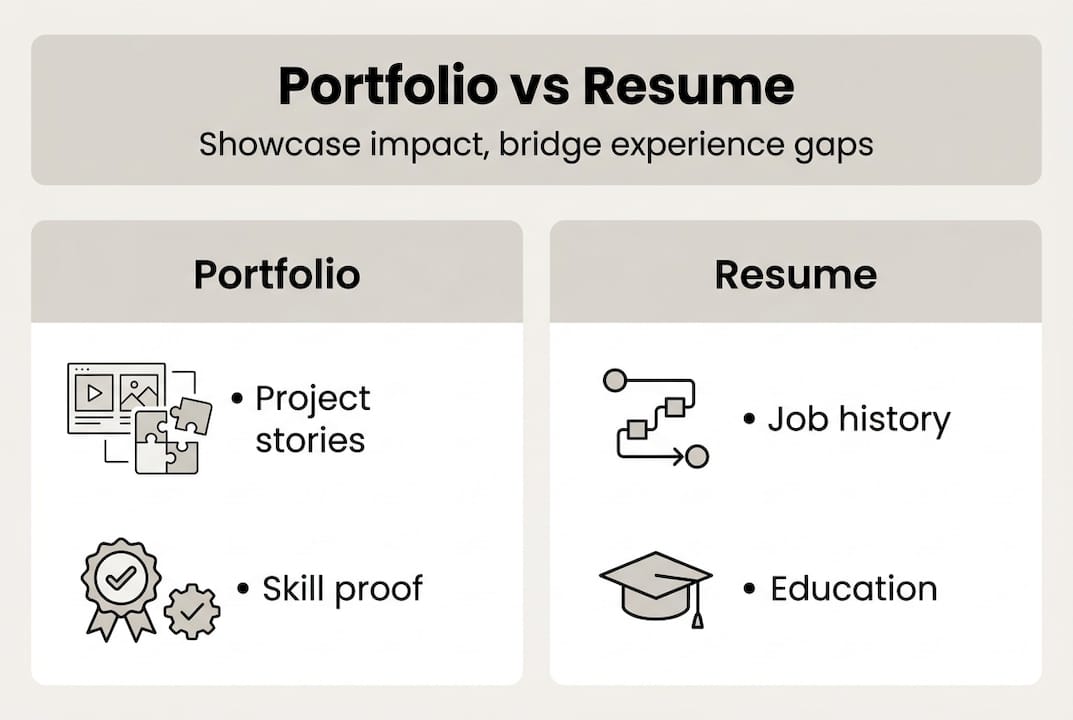
| Feature | Traditional resume | Portfolio |
|---|---|---|
| Shows process | Rarely | Always |
| Demonstrates results | Vague | Specific and visual |
| Tells a story | No | Yes |
| Handles experience gaps | Poorly | Effectively |
| Client trust signal | Weak | Strong |
Here's how to gather testimonials even when you're just starting out:
- Ask professors, mentors, or collaborators for short written endorsements
- Request feedback from anyone you've done free or discounted work for
- Use LinkedIn recommendations and quote them directly
- Include a brief client quote even from informal projects, with permission
Pro Tip: Don't include everything you've ever made. Curate 3 to 5 high-impact examples that represent the work you want to do more of. Your portfolio shapes the kind of clients you attract, so be intentional. Avoiding freelance burnout starts with attracting the right clients from the start, not just any client. If you're already noticing signs of burnout, a portfolio reset can be part of the recovery.
How portfolios clarify your value—and boost your stability
Ambiguity is expensive. When clients can't clearly evaluate your skills, they default to caution, which usually means lower offers or no offer at all. Freelancers face 31% lower callback rates for full-time roles due to unclear signals. A portfolio directly addresses this by making your competence and commitment visible.
"Portfolios don't just show what you've done. They show who you are as a professional and what working with you actually looks like."
Here's how portfolio clarity translates into income stability:
- Repeat clients return because they trust your process, not just your output
- Referrals increase because clients can easily share your portfolio with others
- Rate negotiations shift in your favor when your value is documented
- You reduce breaking client dependency by attracting multiple aligned clients simultaneously
- Setting freelance boundaries becomes easier when clients already understand your scope and expertise
Portfolios also bridge the gap to full-time opportunities. If you ever want to transition from freelancing to a staff role, or simply want the option open, a well-organized portfolio tells employers you're a serious professional, not just someone filling time between jobs. Combined with setting freelance prices confidently, a strong portfolio positions you to earn more from fewer, better clients.
Targeted project stories are especially powerful here. Instead of a generic "I do web design," a portfolio entry that says "I rebuilt an e-commerce checkout flow for a boutique retailer, reducing cart abandonment by 22%" tells a client exactly what you're capable of and what it means for their business.
Building a standout freelance portfolio: Steps and common mistakes
Building a portfolio doesn't have to be overwhelming. The problem-solution-result format with clear metrics, testimonials, and before-and-after visuals is the proven structure. Here's how to get started:
- Audit your current assets. List every project you've completed, paid or unpaid. Note the outcome, the client or context, and any measurable results.
- Select your top 3 to 5 examples. Choose work that reflects your niche and the type of clients you want to attract going forward.
- Write a case study for each. Describe the problem, your approach, and the result. Keep it concise but specific.
- Add visuals. Screenshots, mockups, before-and-after comparisons, and data charts all increase impact.
- Gather testimonials. Even one strong quote from a satisfied client or collaborator adds significant credibility.
- Choose a platform. Tools like Notion, Behance, Cargo, or a simple personal website all work. The platform matters less than the content.
Common mistakes that kill portfolio effectiveness:
- Too broad: Showing work across ten unrelated industries confuses clients about your specialty
- No story: Listing projects without context leaves clients guessing about your actual contribution
- Outdated work: Keeping old, low-quality projects because you don't have much else signals stagnation
- No metrics: Vague descriptions like "improved the website" mean nothing without numbers
- Set and forget: A portfolio that hasn't been updated in a year suggests you haven't grown
For more portfolio building tips, the xflowpay guide covers platform choices and presentation strategies in depth. The most important habit is simple: update your portfolio every time you complete a project you're proud of. Stagnation is the quiet killer of freelance momentum.
The uncomfortable truth most freelancers overlook about portfolios
Here's something most freelance advice skips: portfolios aren't just for designers and writers. If you're a consultant, developer, strategist, bookkeeper, or coach, your clients still make decisions based on proof, not promises. The format of your portfolio changes. The need for one doesn't.
We've seen freelancers spend years chasing gigs, hustling for referrals, and wondering why income feels so unpredictable. The answer is often that they never built a portfolio that works for them while they sleep. Inbound opportunities, the ones that come to you, only happen when there's something for people to find and evaluate.
The hard lesson is this: those who wait until they "need" a portfolio have already missed opportunities. Every month without one is a month of invisible work. Your freelance income equation isn't just about rates and hours. It's about positioning. A portfolio shapes your narrative, sets your negotiating power, and signals to the market exactly what you're worth. Start before you think you're ready.
Ready to boost your freelance income stability?
Your portfolio is only one piece of the income stability puzzle. Knowing how to present your work is powerful, but understanding your actual earnings, after unpaid hours, scope creep, and admin time, is what separates sustainable freelancers from burned-out ones.
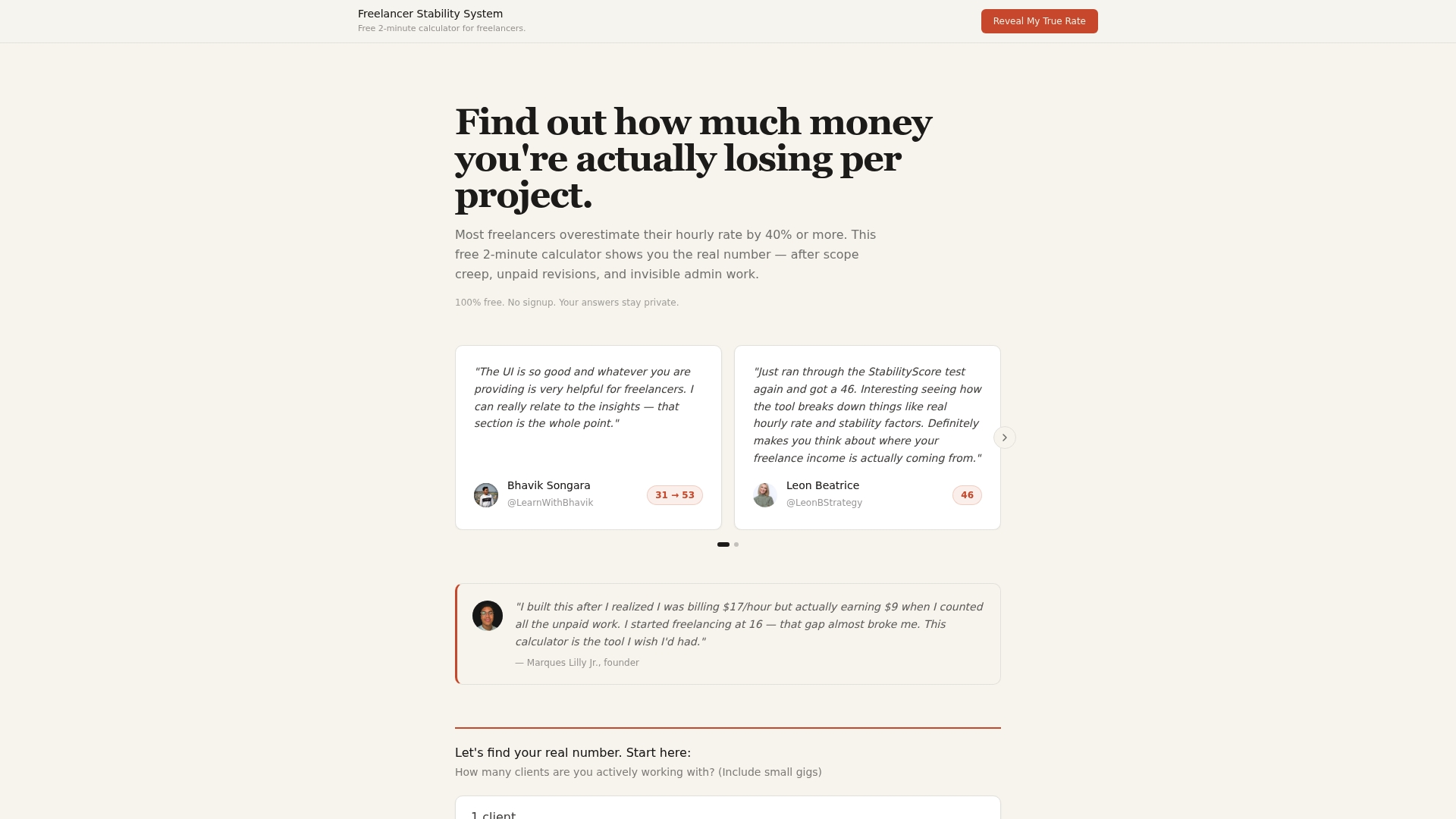
The Stability Score platform gives you free tools to calculate your real hourly rate and spot income gaps you might not even know exist. If you're dealing with the emotional cost guide of unpredictable income or worried about one-client dependency, StabilityScore.app has the resources to help you build a freelance business that's genuinely stable, not just busy.
Frequently asked questions
What should I include in my freelance portfolio if I have no paid experience?
Showcase volunteer, academic, or personal projects using a clear problem-solution-result format to highlight transferable skills and cohesive stories. The source of the project matters far less than the clarity of your contribution and the result you achieved.
How many projects should I feature in my portfolio?
Aim for 3 to 5 high-impact case studies that clearly illustrate your best work and niche expertise. Quality and focus will always outperform quantity and variety.
Can a portfolio help me get full-time work after freelancing?
Yes. A strong portfolio reduces the 31% lower callback rates freelancers face by clarifying your competence and commitment to employers, though some industries may still carry bias toward traditional career paths.
How often should I update my freelance portfolio?
Update it every time you complete impactful work, or at minimum once per quarter, to keep your portfolio fresh, relevant, and reflective of your current skill level.